
Dr. Robin Zeng: Building a "Zero-Carbon New Infrastructure" and Creating New Opportunities for Climate Action
I have been attending this conference every year, discussing industrial transformation and integration, as well as the global cooperation and market development of new energy vehicles (NEVs). Today, these aspirations are becoming a reality. In July and August this year, the retail penetration rate of new energy passenger vehicles in China reached 51% and 54% respectively. The world is steadily approaching the goals set by the "Boao Consensus."
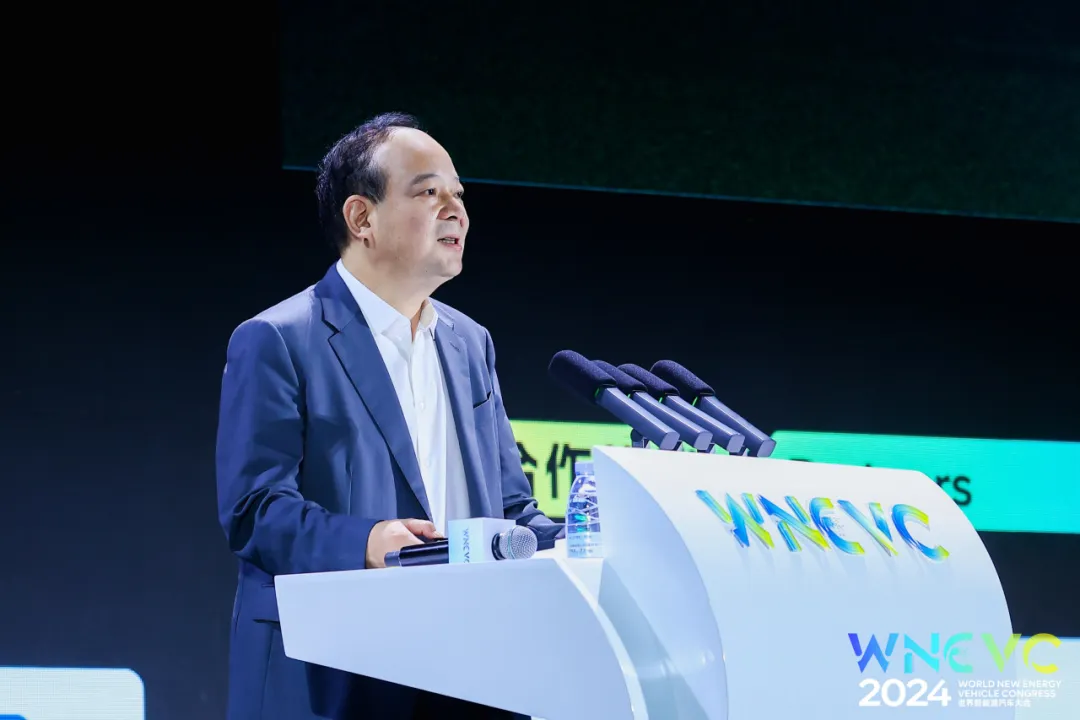
Although some countries and institutions may still have doubts, the trend of global automotive electrification will not change. We have no other choice because it is our inevitable decision to protect the environment and ourselves.
Currently, extreme weather events are occurring more frequently worldwide. This summer alone, China has experienced over 20 severe floods, and there have been countless incidents of heatwaves, heavy rains, and storms around the globe. Can we afford to delay the energy transition? Despite our tremendous efforts to protect the environment, it is not enough. The window of time to achieve the goals of the Paris Agreement is rapidly closing. How to accelerate sustainable development through energy transition has become a pressing and central issue.
To achieve the goals of peaking carbon emissions and carbon neutrality, China has incorporated climate change response into its national strategy. It is a part of the overall ecological civilization construction and the comprehensive economic and social development plan. To strengthen this effort, the country has implemented top-level design and established a policy system known as "1+N."
CATL is an innovative technology company, and our vision is to make outstanding contributions to the new energy transition for humanity. To accomplish this, we have put forward our own solution: the construction of a "Zero-Carbon New Infrastructure," which will unlock new opportunities for climate action.
What is "Zero-Carbon New Infrastructure"?
Infrastructure is a familiar term, encompassing transportation, power supply, water conservancy facilities, and more. However, "Zero-Carbon New Infrastructure" specifically focuses on achieving zero carbon emissions. It involves utilizing technological innovation and new business models to upgrade existing infrastructure, aiming to build an efficient, intelligent, and zero-carbon infrastructure system for society.
In particular, I believe that it should possess the following three key characteristics:
Firstly, a "Zero-Carbon New Infrastructure" must have a holisitic and integrated solution, which is entirely feasible. Addressing climate change goes beyond just electrifying transportation. From ports, docks, and industrial parks to cities, almost every aspect of our society needs to be transformed through "zero-carbon" solutions. This is crucial for accelerating the energy transition because achieving carbon neutrality requires a widespread and profound systemic societal transformation.
Since its inception, CATL has set its sights on three major directions: replacing fixed fossil energy sources with reneawable energies and advanced batteries, replacing mobile fossil energy sources with EV batteries, and integrating innovative solutions for market applications. We will gradually build a holistic and integrated zero-carbon solution. We understand that solving problems piecemeal is not effective. It requires clean energy substitution on the power generation side, improved power generation efficiency, reduced energy transmission losses, flexible energy allocation, energy-saving management on the consumption side, and intelligent energy management. We cannot afford to overlook any aspect.
We have already collaborated with partners to create a series of flagship projects, such as zero-carbon factories, zero-carbon industrial parks, zero-carbon transportation, zero-carbon ports, and zero-carbon communities. There is massive market potential in these areas, as well as significant social and livelihood benefits. We have made sufficient preparations and are eager to share our experiences and strengths in the field of new energy, actively contributing to the implementation of China's dual-carbon strategy.
Secondly, "Zero-Carbon New Infrastructure" must be sustainable.
From its initial design, it should be dedicated to achieving sustainable development, with long-term environmental and economic viability.
We understand that batteries are not only crucial components of green transportation but also the foundation for renewable energy storage and smart grids. Energy storage has always been a significant challenge. As a core element of "Zero-Carbon New Infrastructure," batteries must be recyclable; otherwise, they would create new environmental issues, making sustainable development impossible to achieve.
However, achieving battery recyclability is no easy task. There are challenges such as complex processes, profitability concerns, and battery management complexities that can become barriers.
The good news is that CATL is prepared for this. We have developed a comprehensive battery lifecycle management system covering the entire supply chain, battery design, production, usage, recycling, and remanufacturing. Our focus is maximizing the circular utilization of batteries. In this circular ecosystem, CATL's batteries can be used for up to 15,000 cycles, and the lifespan of our energy storage systems exceeds 20 years. Now, some may wonder what happens after 20 years? Well, there's no need to worry. Last year, we successfully recycled 100,000 tons of waste batteries and produced 13,000 tons of lithium carbonate. The lithium recovery rate reached 91.0%, and the nickel-cobalt-manganese recovery rate reached 99.6%.
So far, our lithium-ion battery recycling scale has consistently ranked first globally for many years. We have also achieved the world's first large-scale industrialization of LFP battery recycling, with a capacity to handle 270,000 tons of waste batteries. In the future, this capacity will increase to one million tons. By 2042, we expect that half of the batteries produced globally will be made from recycled lithium and half from mining new minerals to meet society's demands.
Simultaneously, we are rapidly progressing towards implementing our zero-carbon strategy. Currently, nine of our battery factories have received "zero-carbon" certification. Next year, all of our battery factories will become "zero-carbon." By 2035, we aim to achieve carbon neutrality in the entire battery supply chain. This means that all the batteries we produce will be "carbon neutral."
At present, we are working together with the Global Battery Alliance (GBA) to conduct pilot projects for the "Battery Passport" initiative. In January of last year, we launched the first batch of Battery Passports in Davos, Switzerland. Today, I am pleased to inform you that new standards for the Battery Passport will be released shortly. I believe it will serve as a "passport" for batteries to participate in the zero-carbon new infrastructure.
Lastly, "Zero-Carbon New Infrastructure" is a globalized new ecosystem.
"Zero-Carbon New Infrastructure" cannot have gaps or isolated silos. It should be an open and collaborative global ecosystem. Addressing the imbalance in development is another major challenge in energy transition. However, the world is interconnected, and there is only one Earth. Simply achieving "zero-carbon" in certain regions is not enough to combat climate change. Global cooperation is necessary, from "zero-carbon islands" and "zero-carbon cities" to "zero-carbon villages," ultimately leading to a "zero-carbon Earth." This requires open and shared technologies and close cooperation among countries in policies, industries, and markets. By fostering innovation and enabling the flow of technology, industry, and experiences globally, we can jointly address the challenges in the green transition process and build a green, stable, and reliable "Zero-Carbon New Infrastructure" ecosystem.
Through the Licensing, Royalty, and Service (LRS) model, CATL provides patent licenses, technology, and service support to global car manufacturers and battery companies. Our partners not only gain licensed technologies for cell manufacturing but also receive comprehensive solutions through the life cycle, enabling the rapid application and extensive practice of zero-carbon technologies and experiences on a global scale.
Hainan is one of the provinces in China with excellent environmental quality and is at the forefront of environmental and climate protection. Currently, CATL is collaborating with Hainan to promote zero-carbon cooperation. By leveraging Hainan's overall planning for zero-carbon islands and its local resource characteristics, we are starting with specific zero-carbon scenarios to promote regional decarbonization and collaboration in microgrids. Ultimately, we aim to achieve comprehensive zero-carbonization across the entire island of Hainan, contribute to Hainan's comprehensive zero-carbon construction, and drive the coordinated development of zero-carbon in surrounding cities.
This is not only a large-scale project but also a technically intricate task. We are looking forward to it and have great confidence. In the past, Hainan was a hub along the ancient Maritime Silk Road, connecting the East and the West, which changed the world. Now, we hope to help Hainan become a major hub for global zero-carbon new infrastructure and witness new "zero-carbon" cooperation in the global industry.
We are ready to build the "Zero-Carbon New Infrastructure." We look forward to sailing ahead together with you and accelerating our progress. We can't afford to wait any longer because time cannot be "recycled."
By clicking on the button “I accept” or by further usage of this website you express consent with usage of cookies as well as you grant us the permission to collect and process personal data about your activity on this website. Such information are used to determine personalised content and display of the relevant advertisement on social networks and other websites. More information about personal data processing can be found on this link. Read More